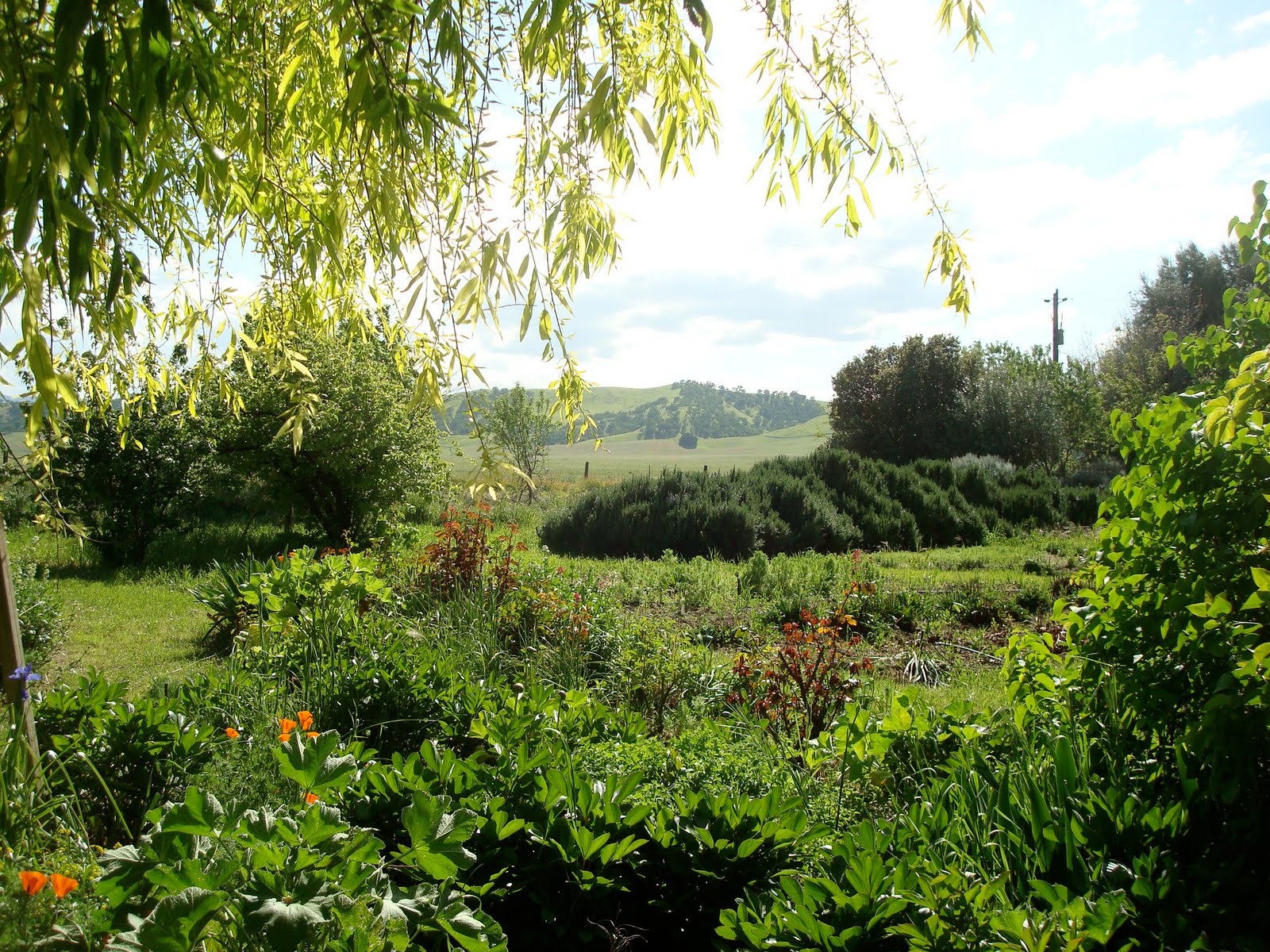
After a few months of working out at Good Humus, one “treasure” among many that I have discovered is the multitude of visitors that come. Though it has become routine to see new faces for unexpected reasons (to me that is), this past Friday a visit was made that was unusually special to me. As I was clearing the garden beds of the shoulder-high wild oats, up drove two large white vans from which a gaggle of slightly scruffy and seemingly curious college students stumbled out. For a change, these were familiar faces, my fellow UC Davis peers; only now instead of being in class with them, I was giving them a tour of the farm. It was a surreal moment- just two years ago I was in that class having my first visit ever to Good Humus (there are scenes from that day recorded in The Last Crop) and now I am working here. I have gone from helping Annie at market, to interning once a week, and now working 4 days a week. I am spending my last few months in Davis with the people who have taught and provided me with more than I could ever ask for- Jeff and Annie are my newfound heroes!
Hero implies bravery, noble qualities, and sometimes life-saving acts- I can say the Mains have certainly lived up to these implications. Just about everyday Jeff and Annie tell some story about when they first started farming or when some terrible accident happened or when they undertook a new project. The stories never end and many are currently in the making, such as the Land Preservation Project. Personally, I can attest that they have saved my life- not from anything per say, but rather by giving me life. When Annie offered me a job on the farm for the Spring, I thought, “Sure, why not? I like farms, I like the Mains, and it’s a job.” But little did I know how much I was going to get in return.
One of the things I have been helping Annie with lately is school visits. Just about every week, a second grade class from a local school comes out to the farm for the day. Usually do I not only spend very little time with children but I also tend to stay clear of the educator role; while I love to learn, teaching others is not my forte. However, I must say I love being with these kids, and I’ve come to realize it’s usually them who are teaching me.

Another aspect of the farm that I wasn’t expecting was the relationships with the other workers. First of all, I have had to sharpen my rusty high-school Spanish. I forget and take for granted the ease of communication with people who speak English. This is a good reminder for me as I prepare to staff at an international camp this summer and study in Turkey this fall. Most of the time I don’t understand what is going on or how to say something, but it doesn’t really matter. The ladies are wonderfully hilarious and have taught me that laughter really is a universal language. They have also taught me that making flower bouquets is not as easy it looks…
These days it seems as though Jeff and Annie aren’t just my heroes. Saturday morning Annie and I made a flower delivery to the Sacramento Food Coop, and since I had never been before, we took a look inside. Little did we expect to see the produce aisle lined with six large banners of pictures from Good Humus, including a shot of the whole family- even Bean the dog made it up there! We were awestruck. The display is part of their new campaign called One Farm at a Time, which is working with the Mains to preserve their farm and extend the model to other farms in the area. It has taken eight years of brave, persistent work for the Mains to get their project where it is today, and what a gift for it to soon be passed on to other farms as well.

The upcoming weeks will be filled with exciting happenings both at the farm and in the local community. For one, Zach and Nicole are getting married at the farm in May, which means lots of preparation- getting the garden and house in good shape and prepping food (no caterer at this event, just another heroic act…). Despite the looming work ahead, we are all looking forward to the celebration and seeing the many people who will be coming from far and wide. Also just around the corner are three screenings of The Last Crop see below for the schedule:
April 23 6:30pm Silvina’s Basket Woodland-$25 we have tickets if you want to purchase one or two….
April 28 7pm Eleanor Roosevelt Circle Davis-$10
April 30 5:30 Community Learning Center Sac-$10
April 30 8:30 Community Learning Center Sac-410
If you are in the area, be sure not to miss it!
Hope to see many of you there- Katie


 They are just beginning to gather boxes and containers to collect the harvest in. We walk over to the spring garden. Though it’s early July, the spring vegetables are still hanging on. Most mornings there’s about six or seven of us on the farm, but today we have some volunteers. We divide up, some in pairs, each taking a vegetable. I take chard. I count out twenty-five rubber bands stretching them over my wrist, still red and swollen from yesterday’s ant bites. I start on one end of the row, pick a few leaves, and estimate how many bunches I think I can get. The plants are looking rough; this will probably be the last week to harvest it. I think I can stretch it and get twenty-five bunches. That will be enough for the fourteen CSA shares that pick up on Wednesday and some to sell at market. It’s always difficult to estimate what will sell - one week chard flies and the next it sits and wilts. Eleven bunches should surely sell. At first I notice bumps on the stems and holes in the leaves, but before long my mind drifts and I make my way down the row- sorting, picking, bunching- all in a sort of rhythm. I make it to the end and use the last rubber band; my estimate was right. I pack the box of chard in the mule making sure it’s still in the shade. There’s a crew pulling out the carrots and then a few finishing up on kale, arugula, cabbage, and beets. I check in with the others first before heading over to the Elder garden, where our summer crops are planted. Someone else has already started on the sungold tomatoes. I grab a basket and head to the peppers. They are just beginning to turn red, so I get what I can not wanting to reap those that still have potential to sweeten. With room left in the basket, I gather what I can find from the sickened cucumber and squash plants. My basket is full.We reconvene in the kitchen. I fill a mug with water and take a seat. It’s mid morning, and we are doing well. As others return to harvest, I man the washing station. First, I turn the generator on, ceasing the quiet serenity, and then proceed with the hose. The chilled well water, splashing my hand, makes me shiver as mud runs off my fingers. I dump the box of chard in, give it a good soaking, shake each bunch, and place them back in the box. As I proceed with the rest of the greens, two others are washing and bunching the carrots. How quickly they change from long brown sticks to shiny orange deliciousness. I scamper over and bite into a fallen carrot. Yum! Still crunchy and sweet, but I can tell the summer heat is starting to take the best of them.
 ah and then give it a go. For his every one stroke, it takes me two or three- so much for unison. Twenty minutes and many zig-zags later, we make it to the other shore. We jump out and begin unloading onto the dock. Noah brings the truck down, and we load from the dock to the truck. I climb aboard the old Ford and close the passenger door with a rickety bang. Noah chain locks the boat to a post, but the lock is rusted, so he ties it tight and hopes it’s still there when we return.


